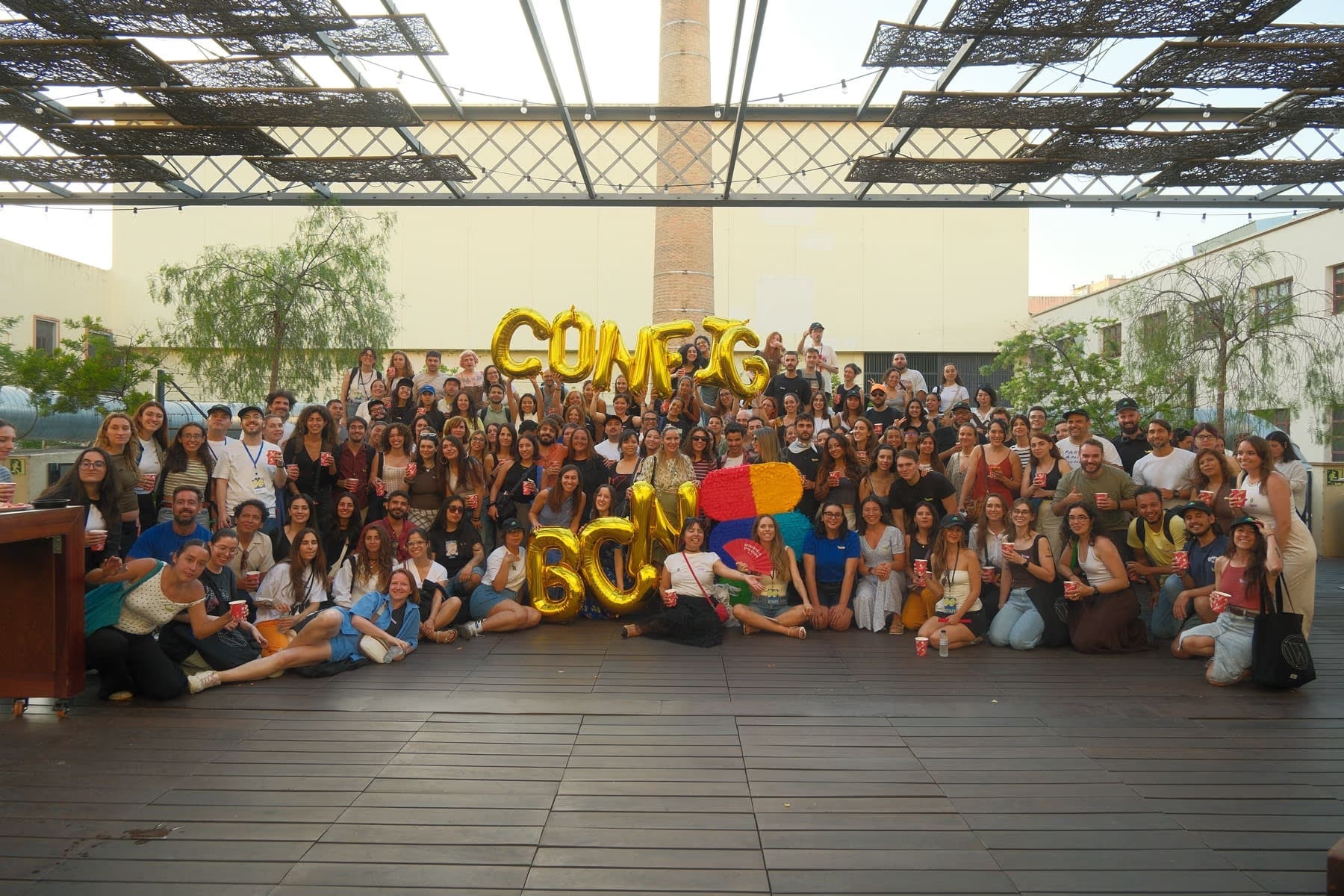
There’s one piece of design that never ships in Figma: how a person feels in the first five minutes after walking through a door. At Friends of Figma Barcelona, that one is mine.
the community
Friends of Figma Barcelona is Figma’s official chapter in the city: an open community of designers and product people who gather several times a year for talks, panels and watch parties. It isn’t a paid conference or a closed club — it’s people showing up after work, often alone, to see whether they fit.
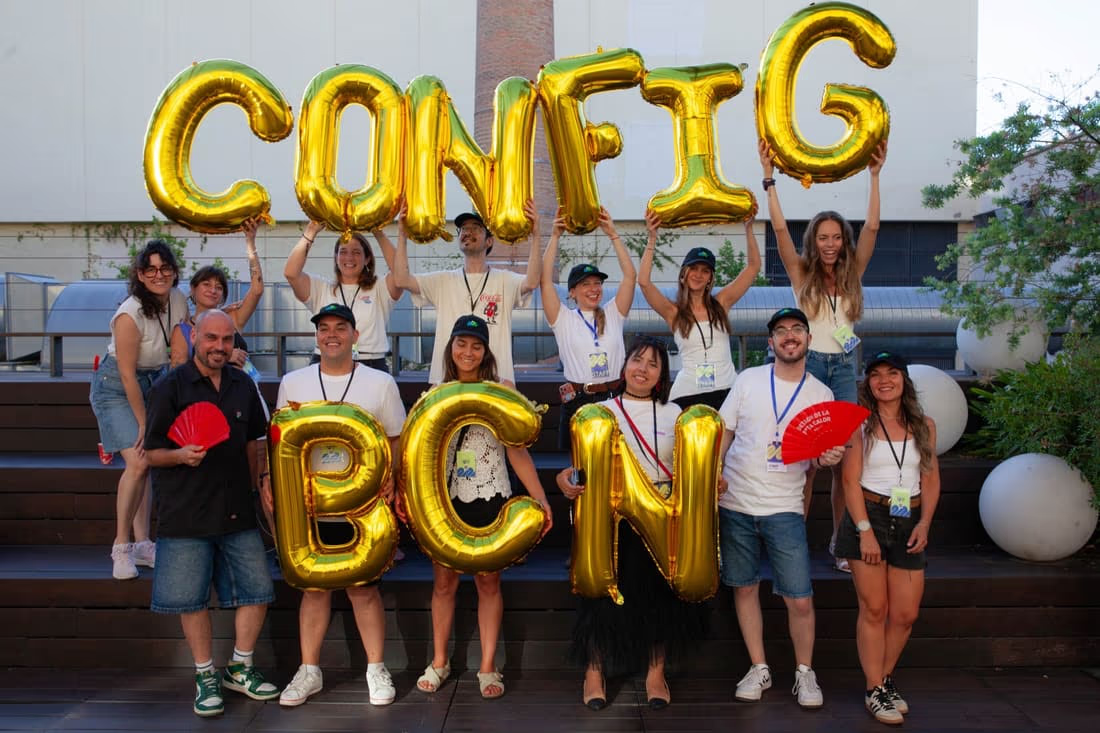
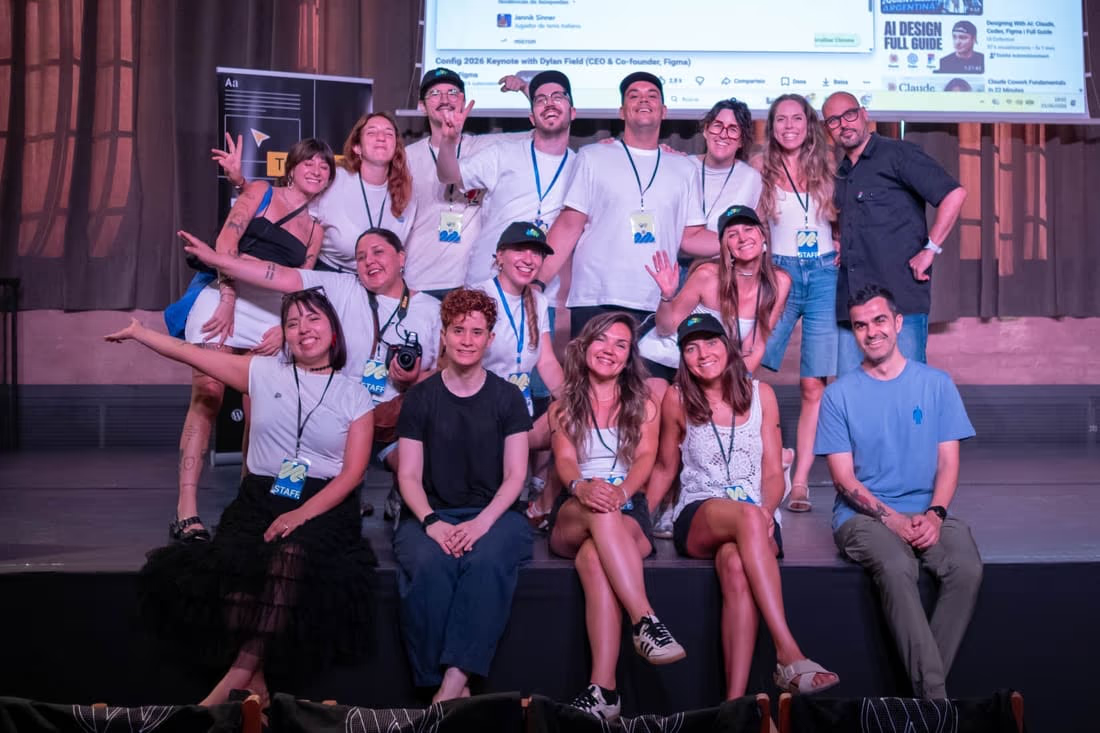
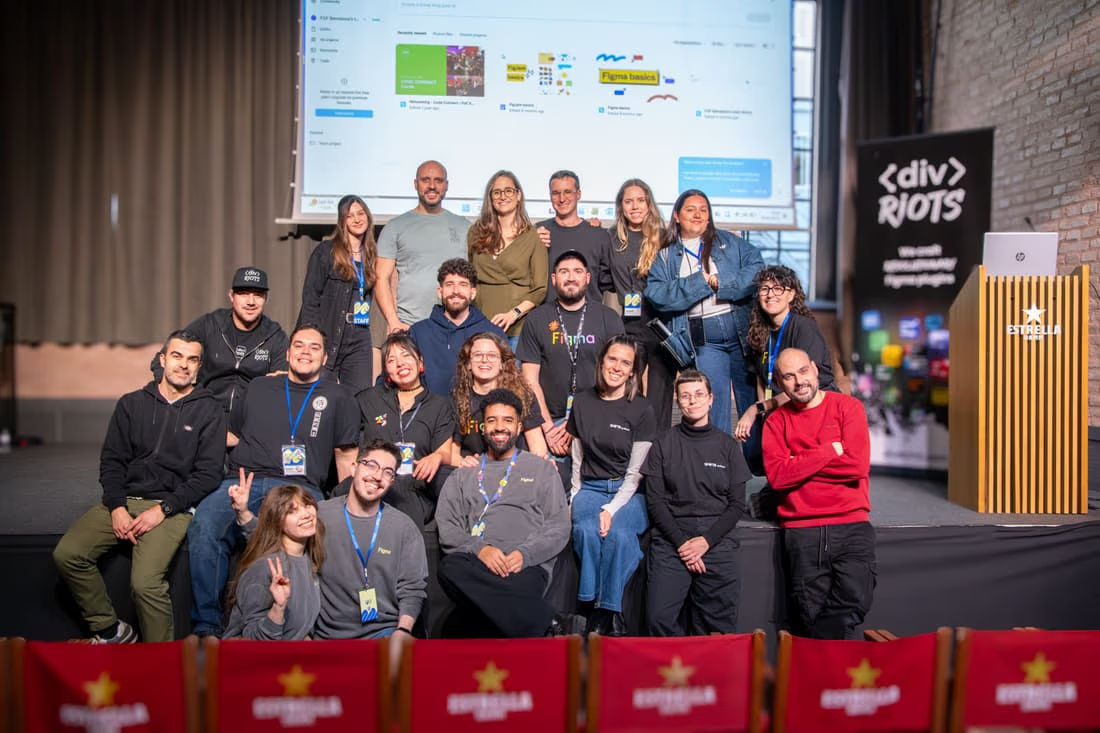
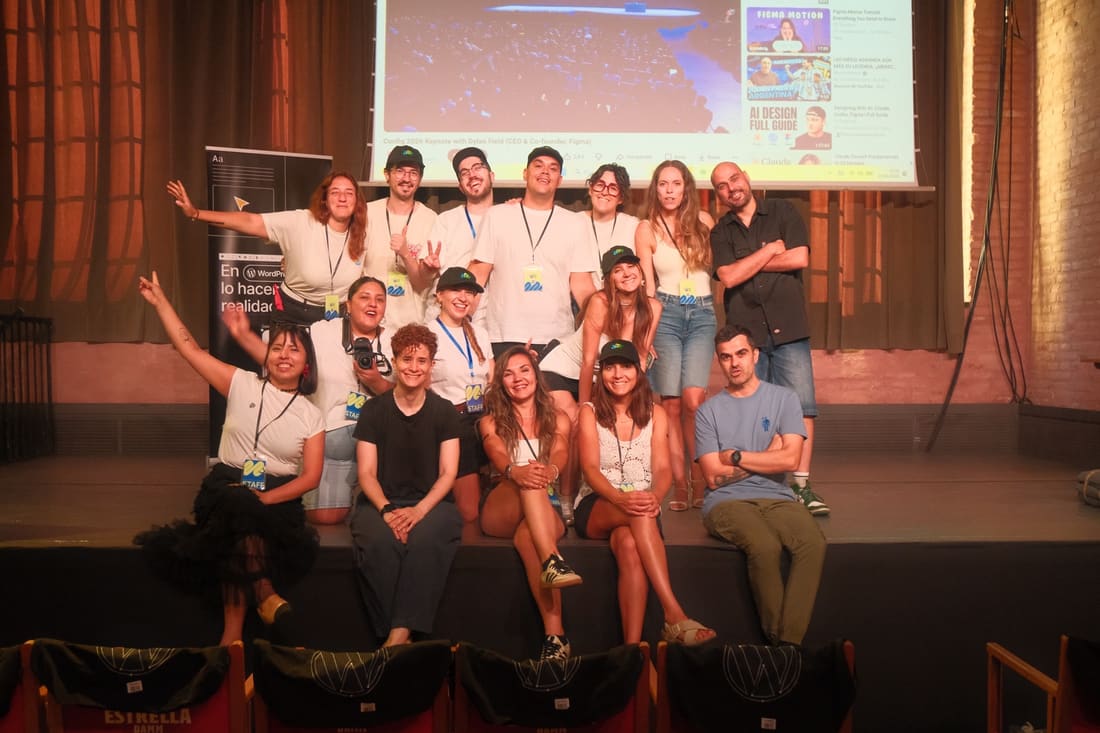
Every event rests on a team of volunteers. I’m part of that staff.

& welcome
chapter in BCN
<div>RIOTS and more
from attendee to staff
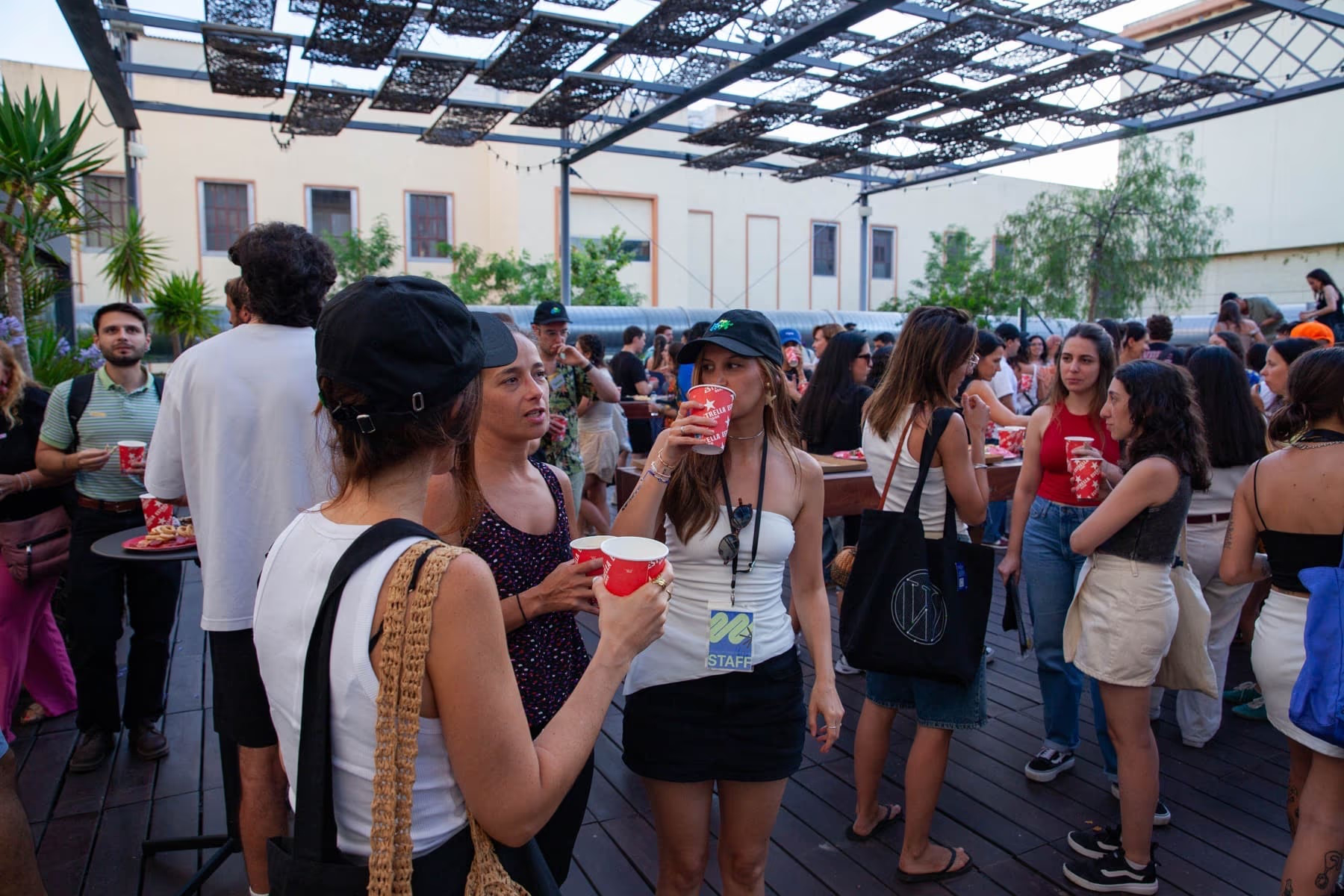
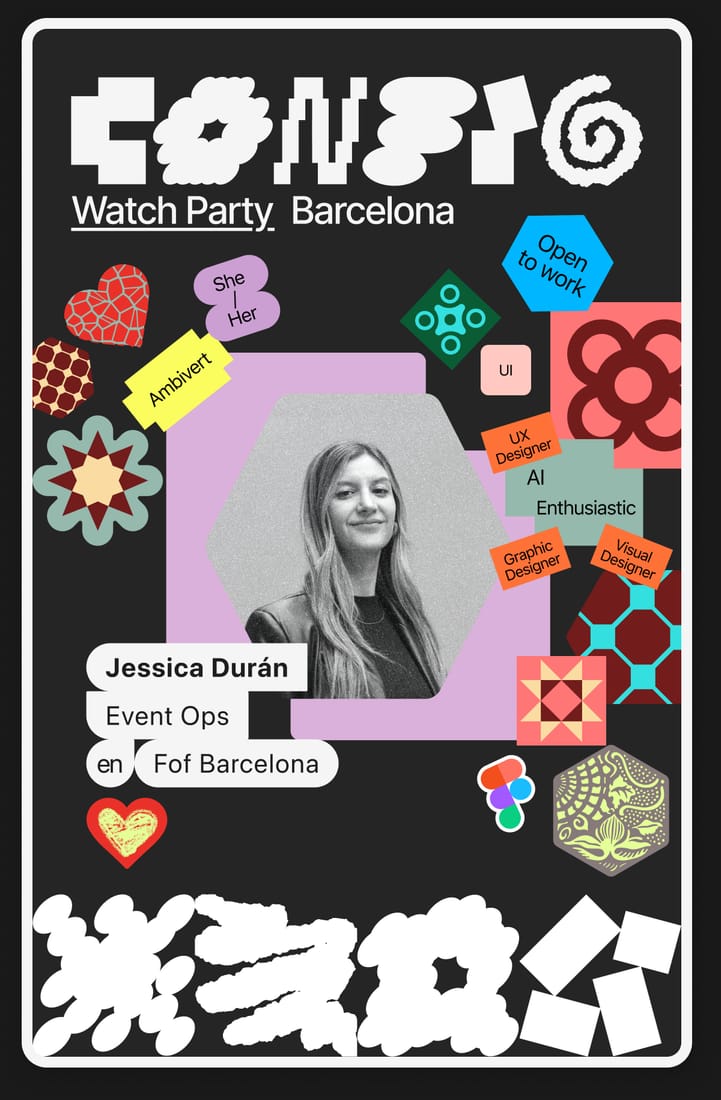
I arrived at this community as an attendee. I went to my first event knowing nobody, with that awkward mix of excitement and self-consciousness anyone who has gone somewhere alone will recognise. I still remember exactly who came over to talk to me, and how much the night changed from that point on.
I came back. And again. Until I stopped being the one arriving and became part of the staff: the one who now walks over.
That path is precisely what makes me useful in the role. I know exactly where people who come alone end up standing, at what moment they start thinking about leaving early, and which sentence makes them stay.

before anyone arrives
The work that shows is the work nobody sees. My part starts hours — sometimes weeks — before the doors open, in pre-event operations.
Splitting tasks with the rest of the staff, room timings, coordinating with the venue and with the sponsoring brand.
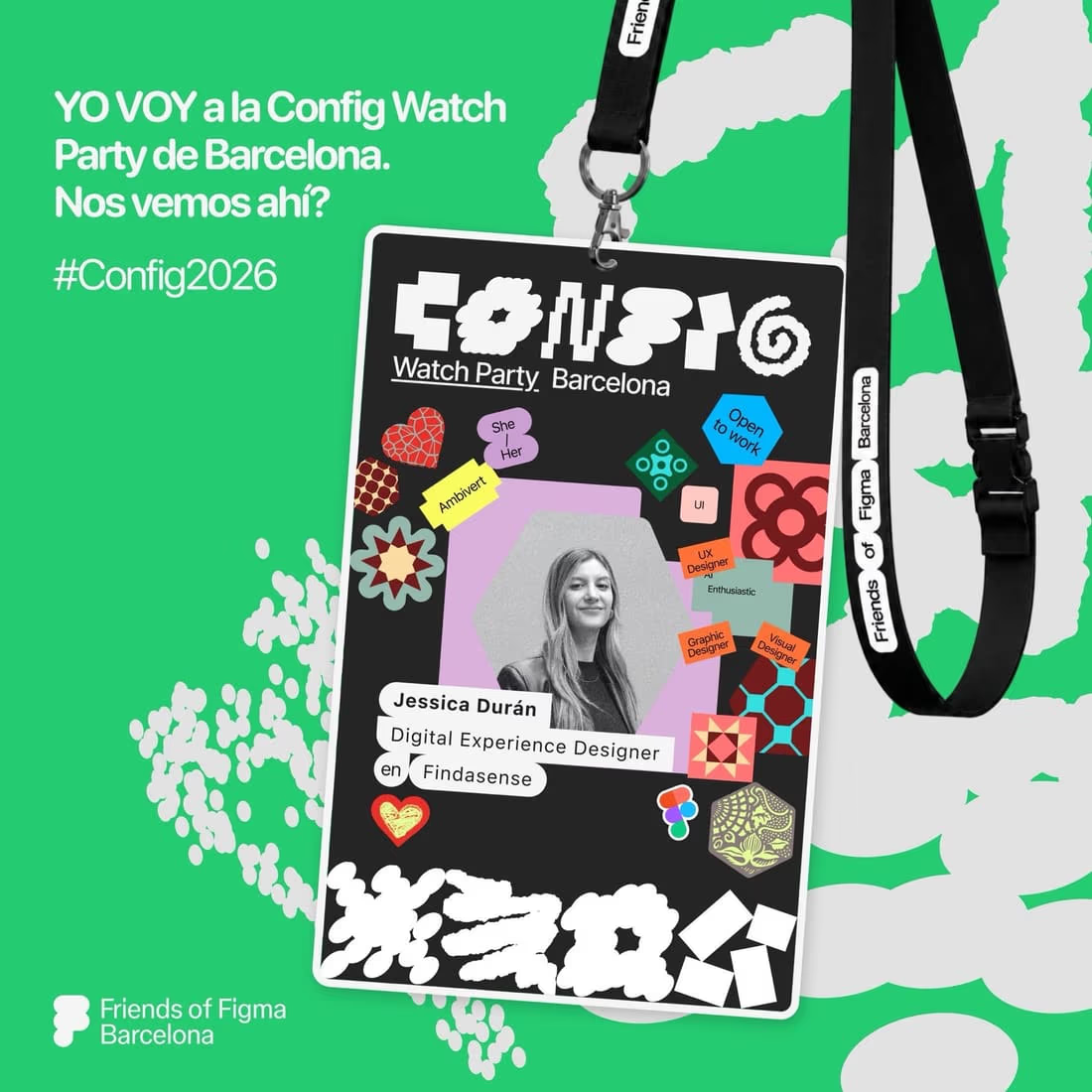
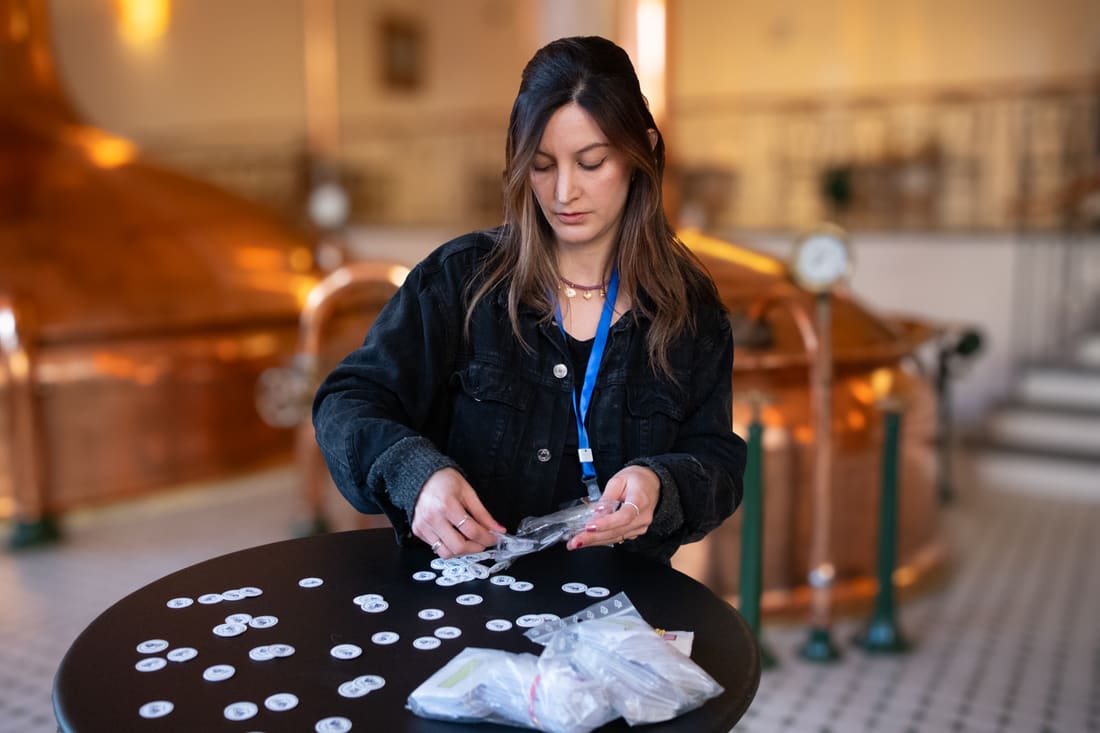
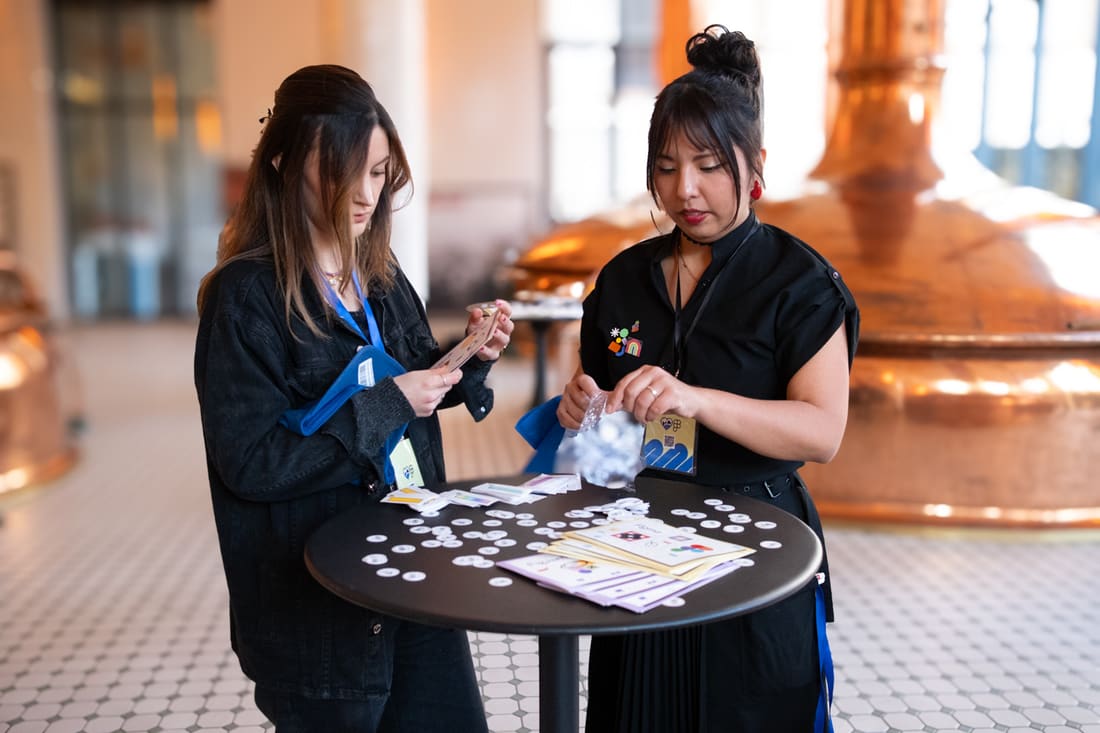
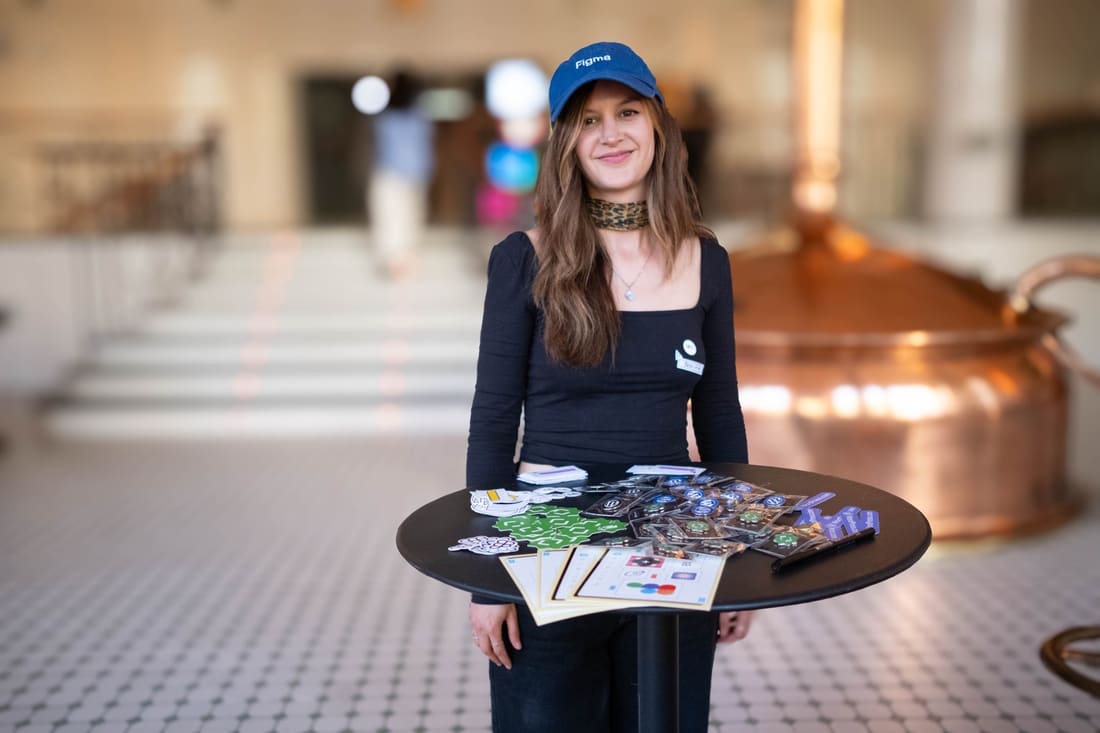
Badges, lanyards, sticker packs, merch and signage: assembling hundreds of kits by hand so every person gets theirs.
Setting the space before opening: seating, a welcome pack on every chair, the check-in point and the entrance flow.
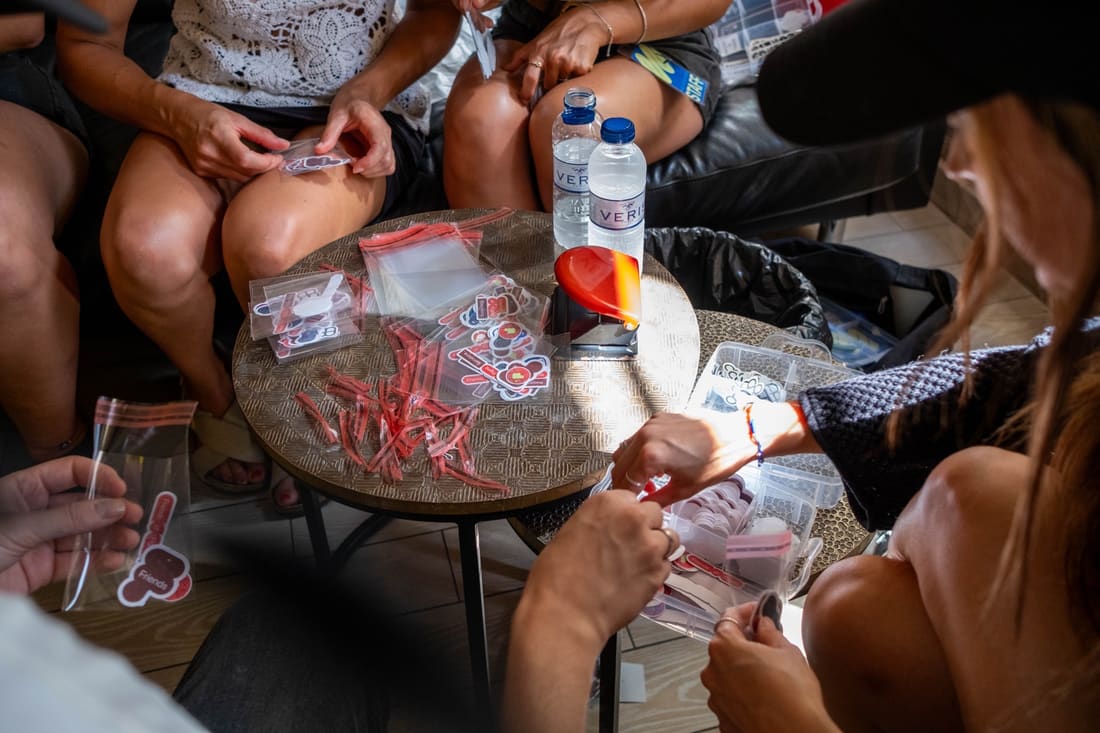
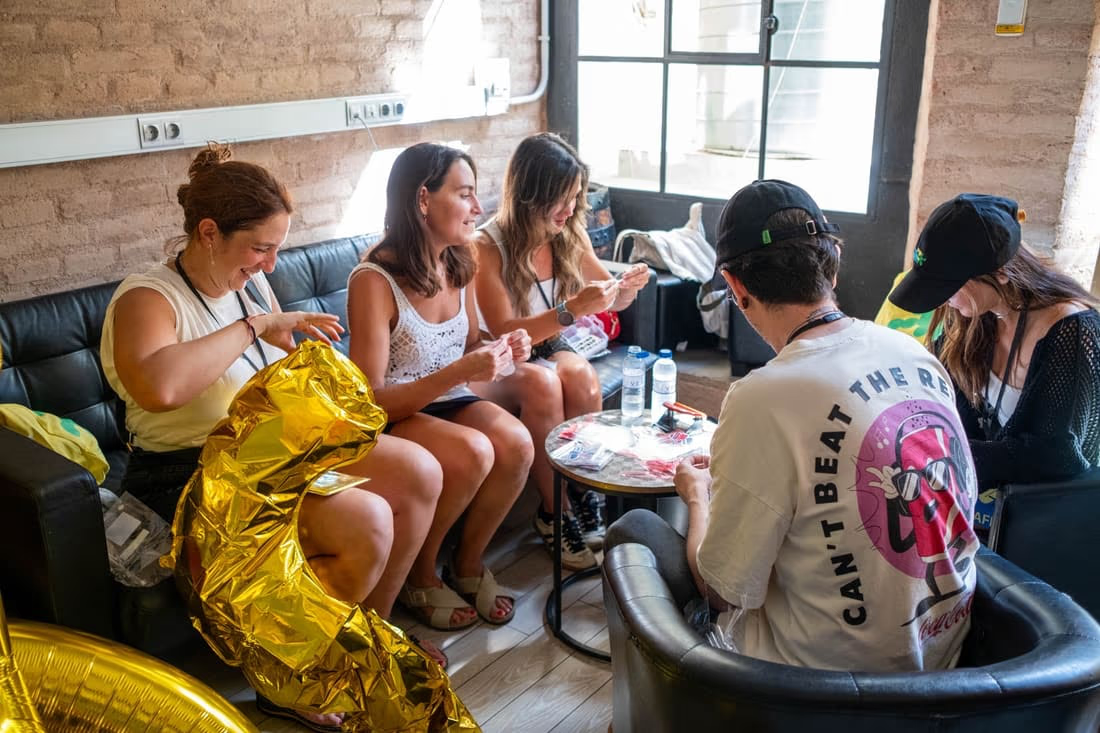
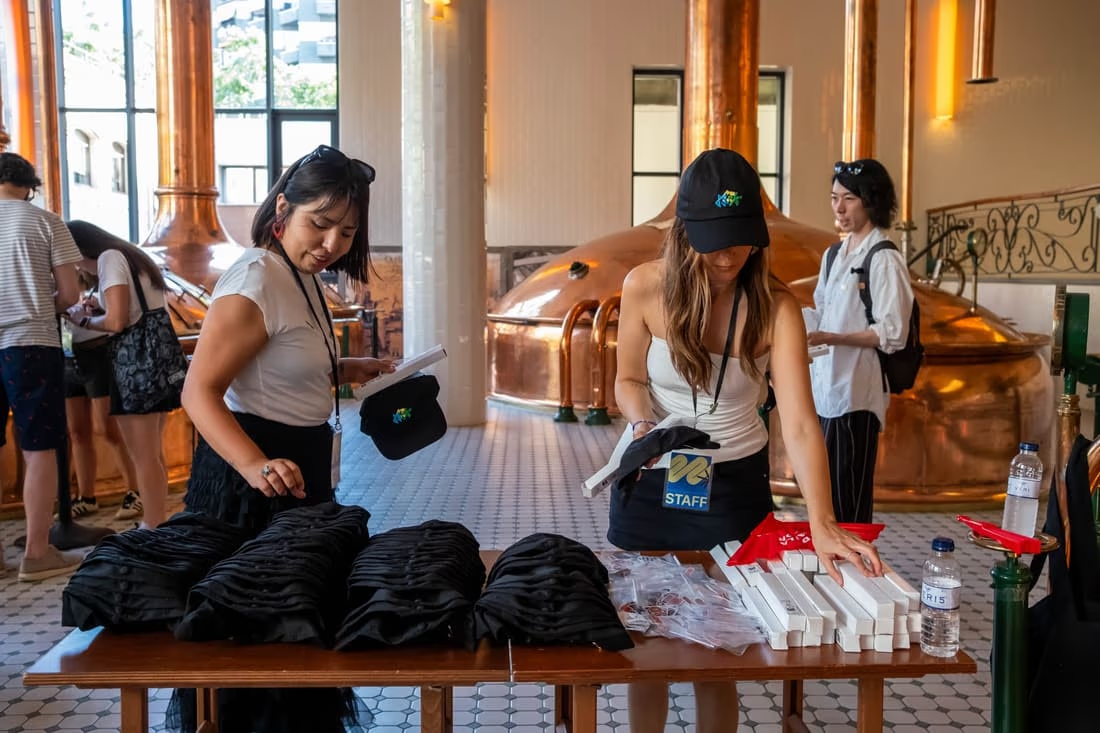
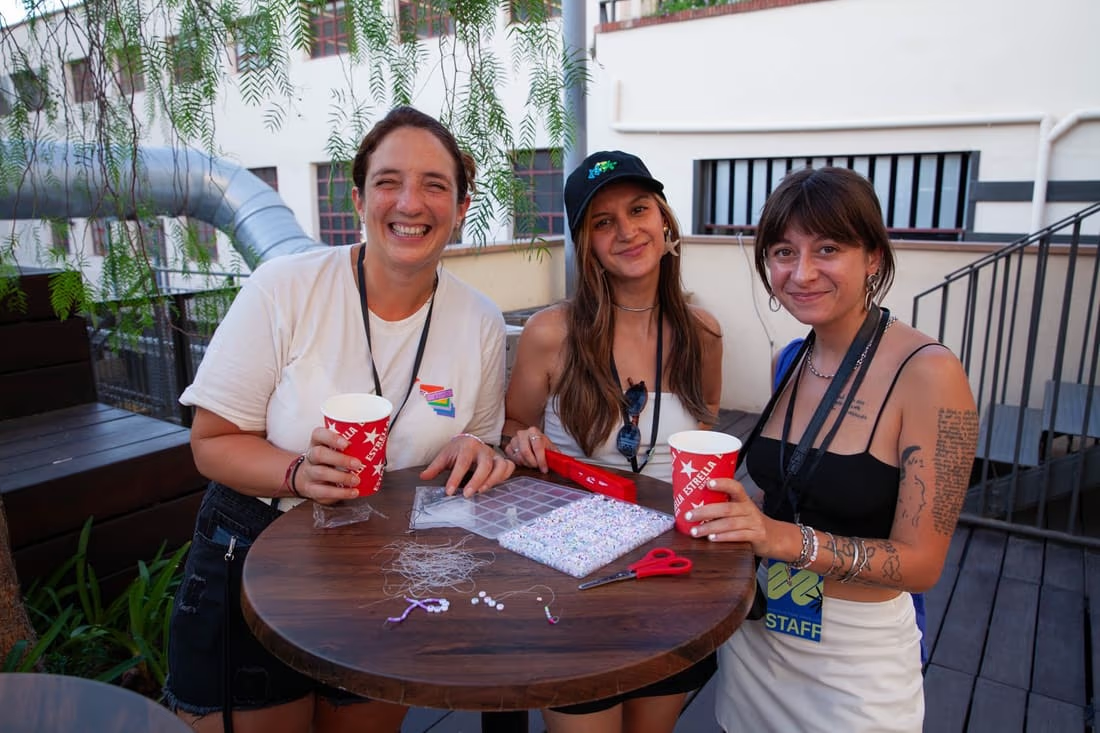
the moment of connection
When the doors open, the job changes. I leave the logistics behind and take the spot where I’m needed most: the entrance.
My job isn’t handing out badges — that’s the excuse. It’s reading the room: spotting whoever arrived alone, whoever has spent ten minutes looking at their phone in a corner, whoever is standing at the edge of a group. And making the introduction that person won’t make on their own.
Connecting a first-timer with someone who has been in the community for years is, in practice, a design problem: reducing the friction of a first contact.
It’s a role you do with names, memory and a question ready. It works when, half an hour later, that person is already in a conversation that doesn’t need me.
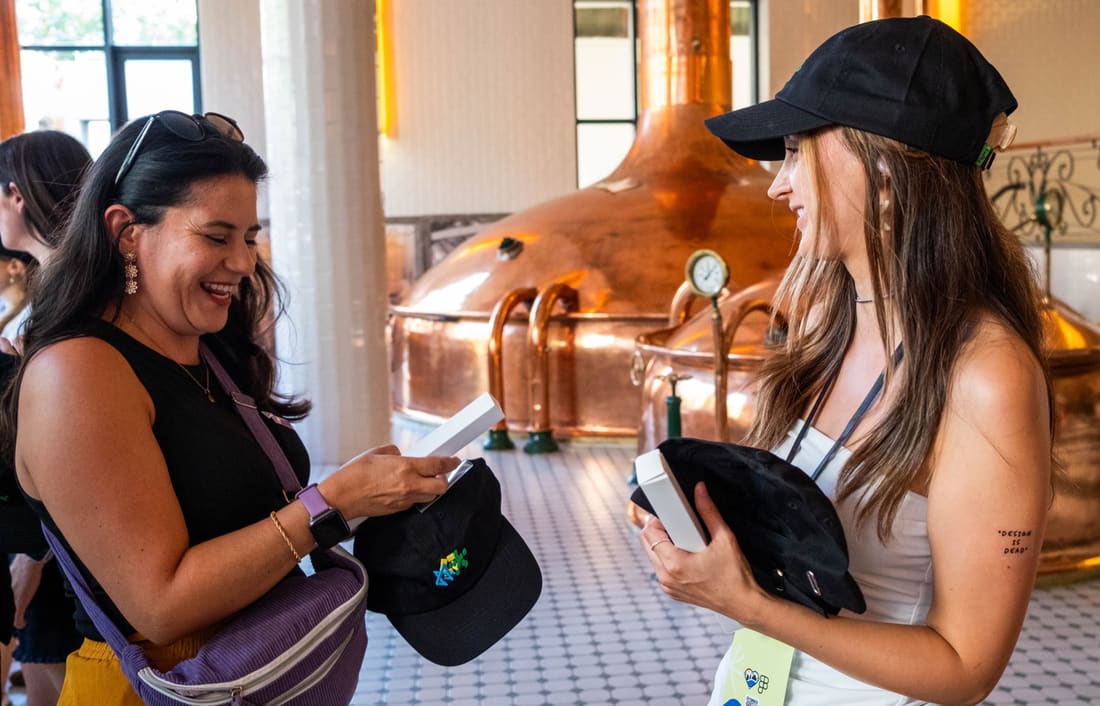
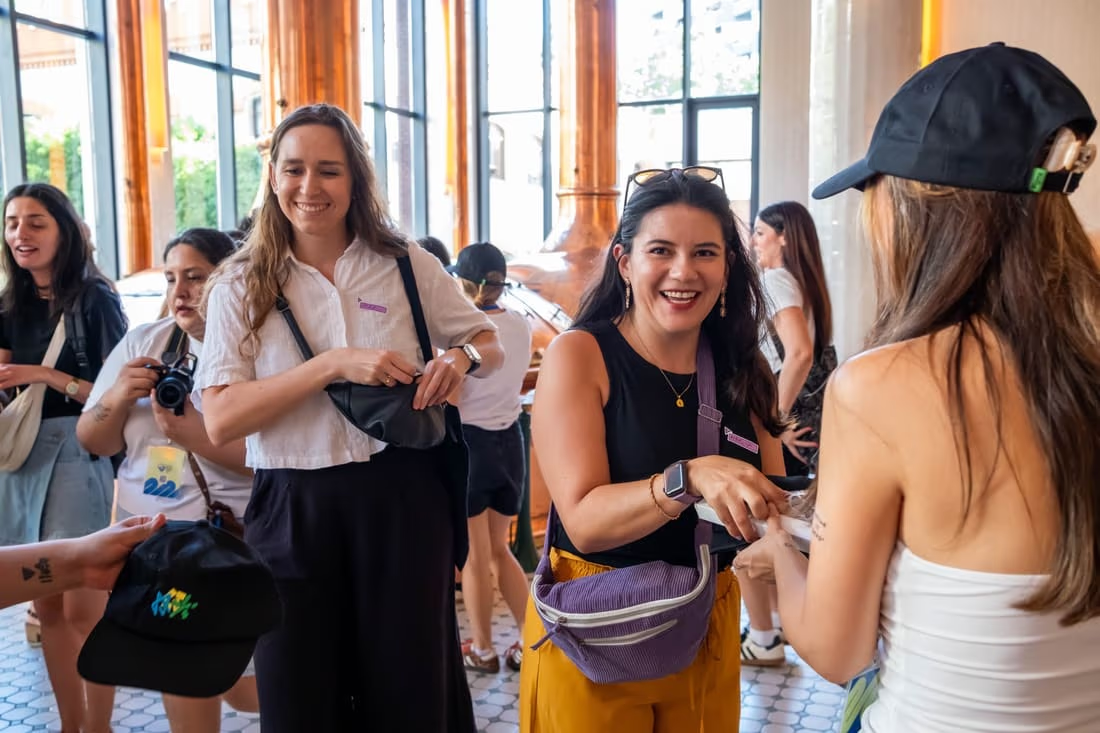
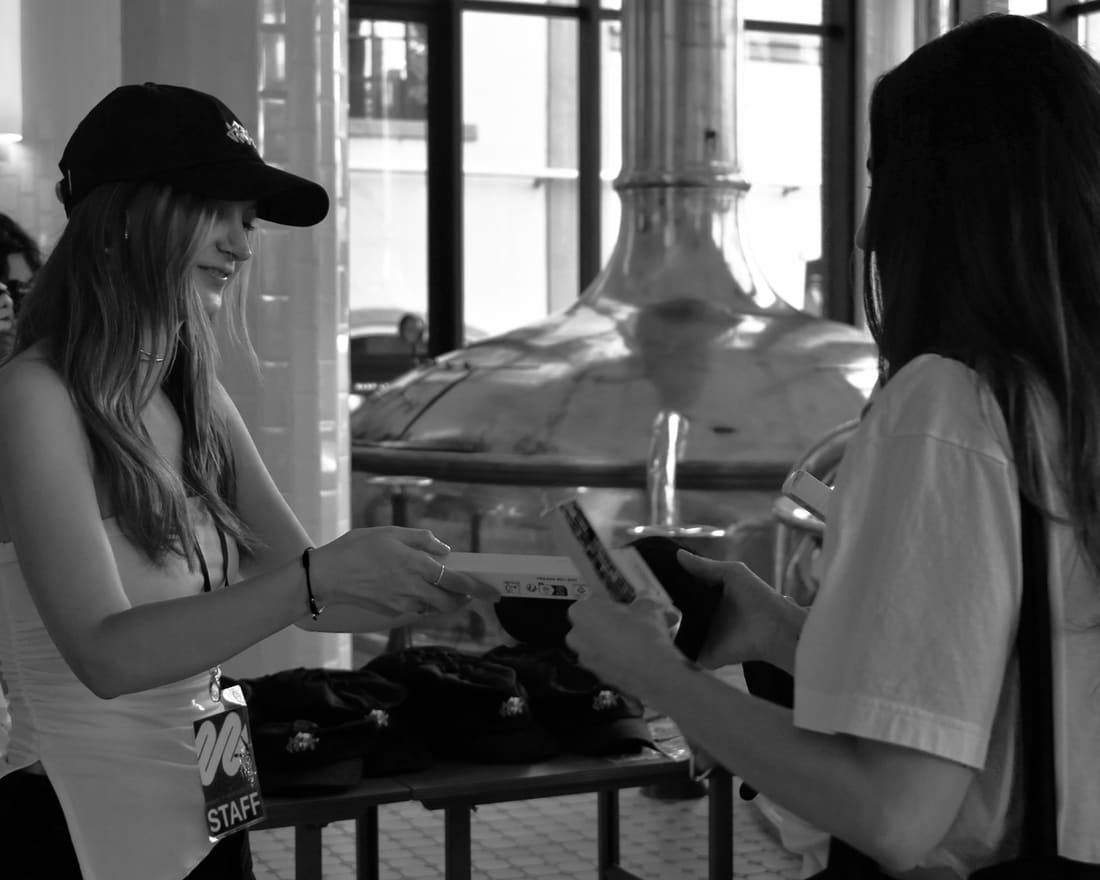
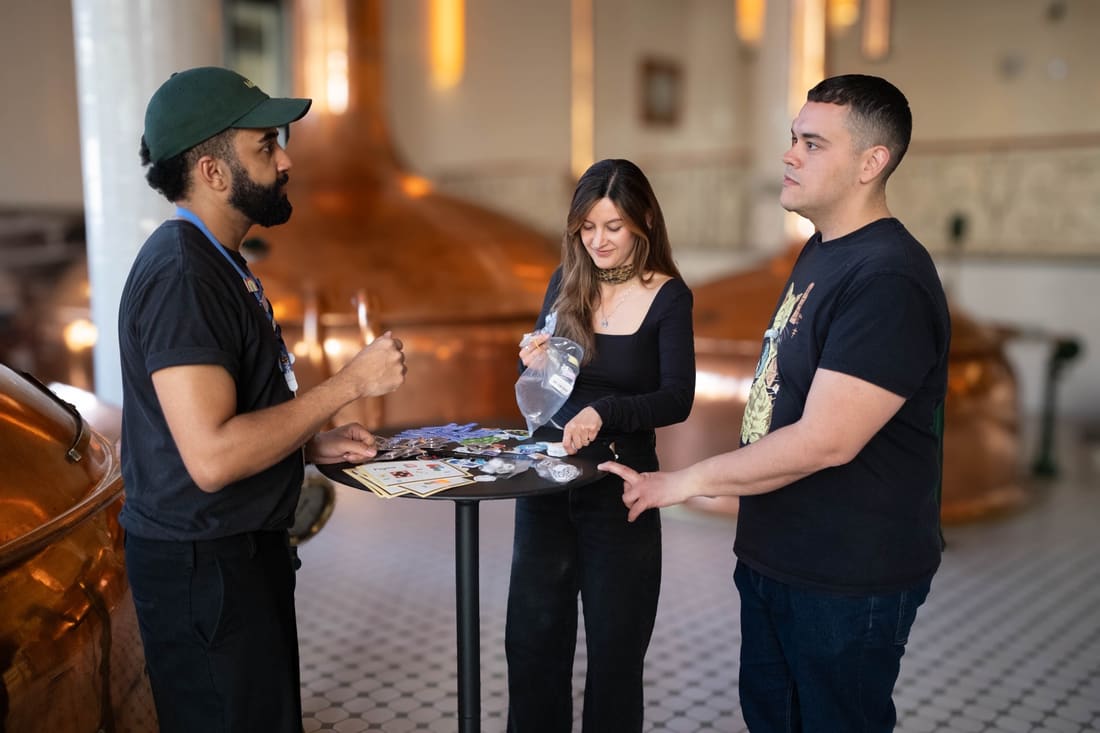
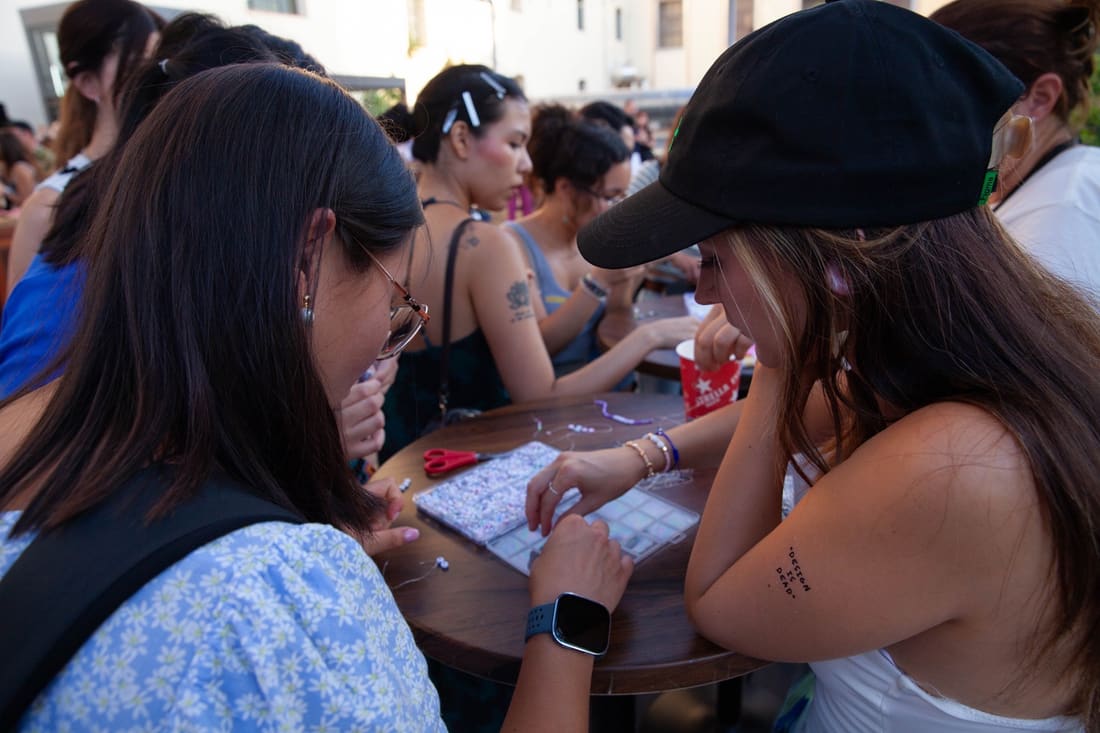
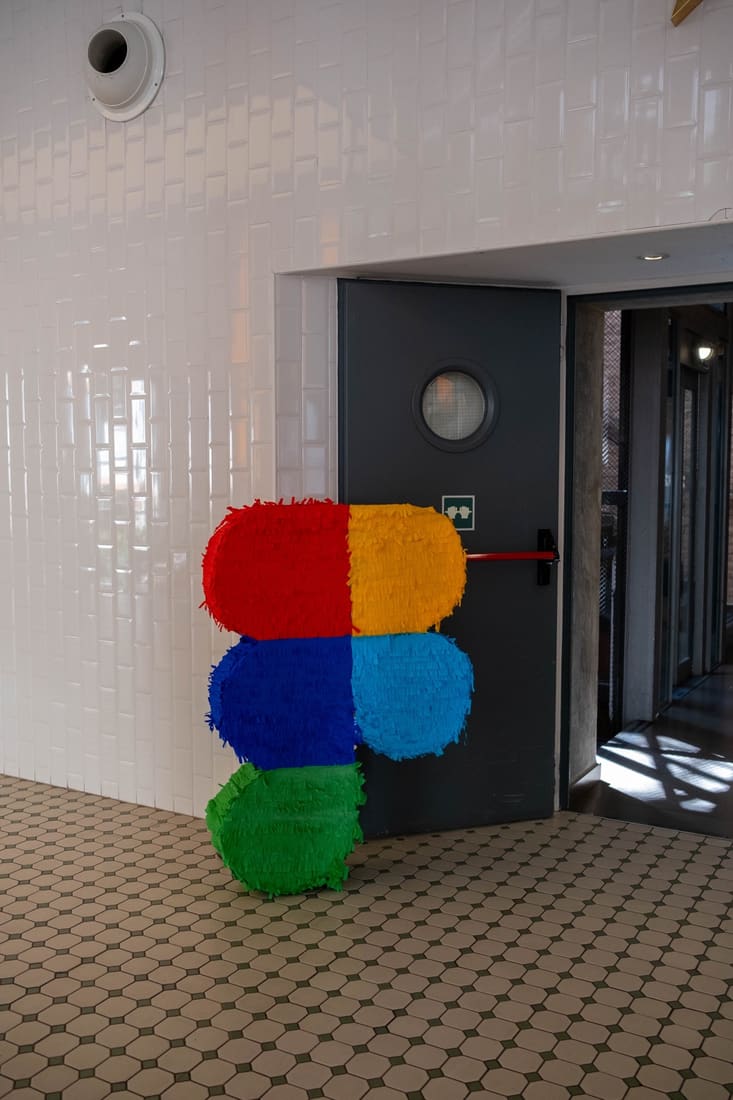
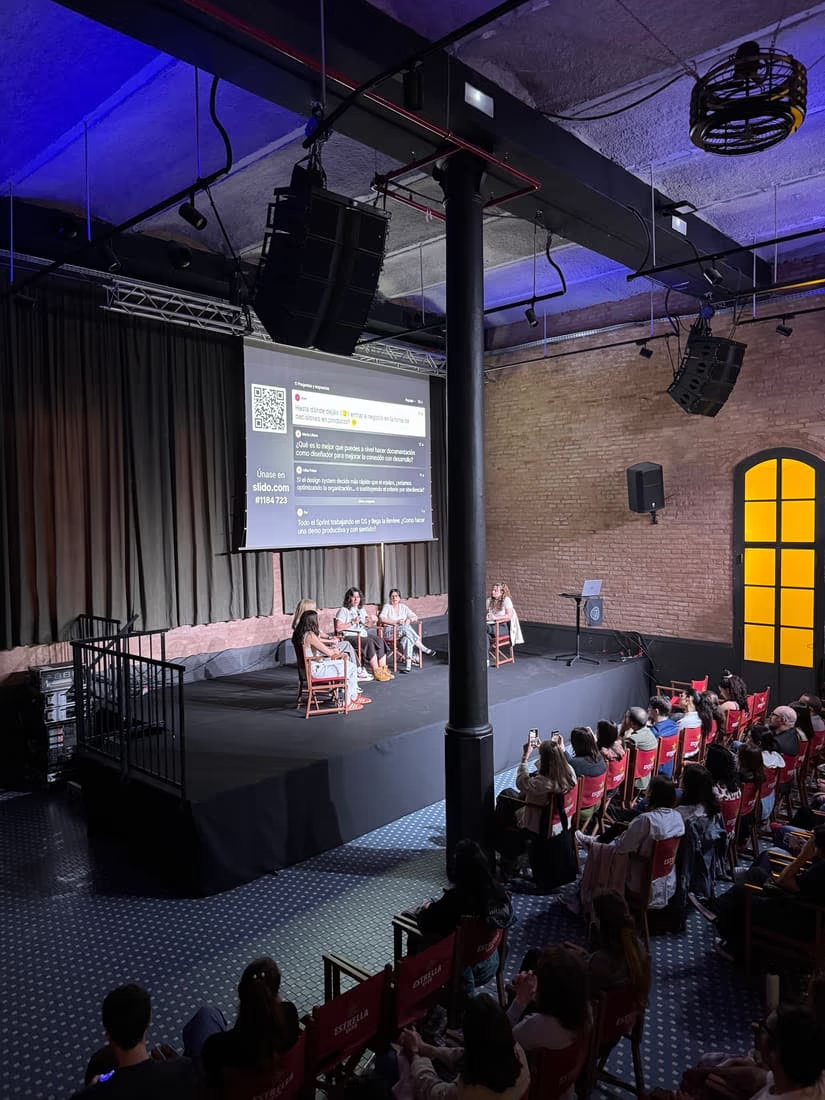
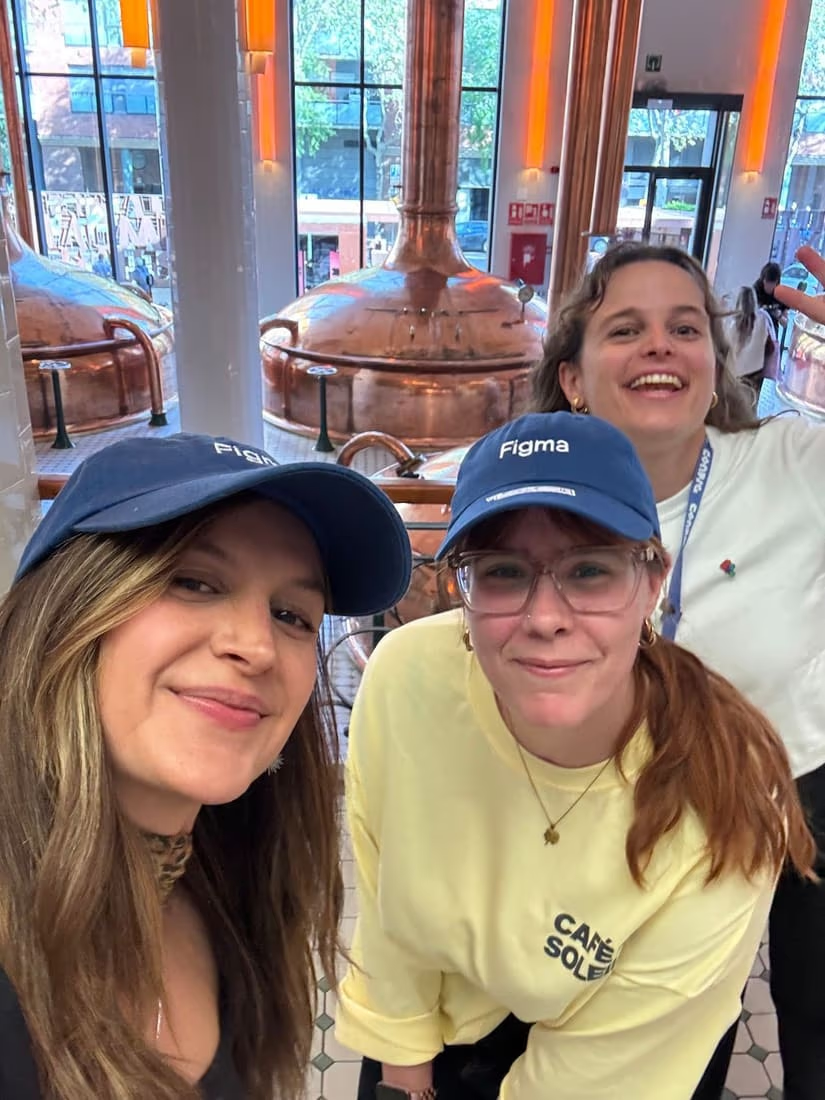
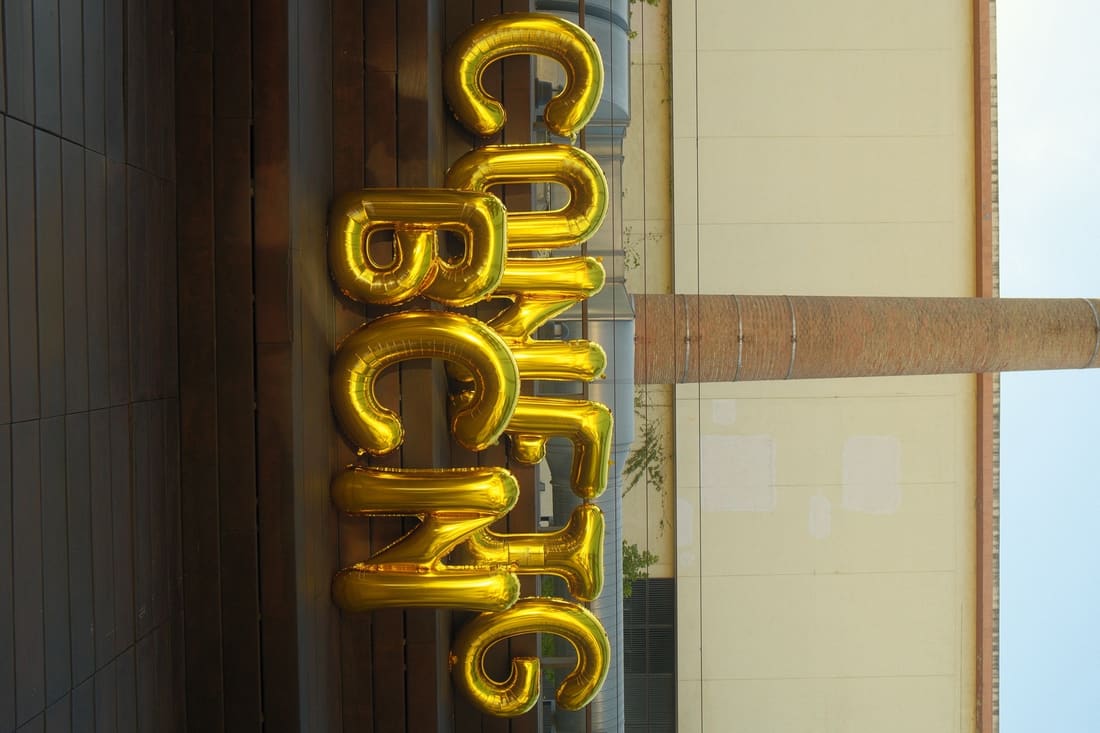
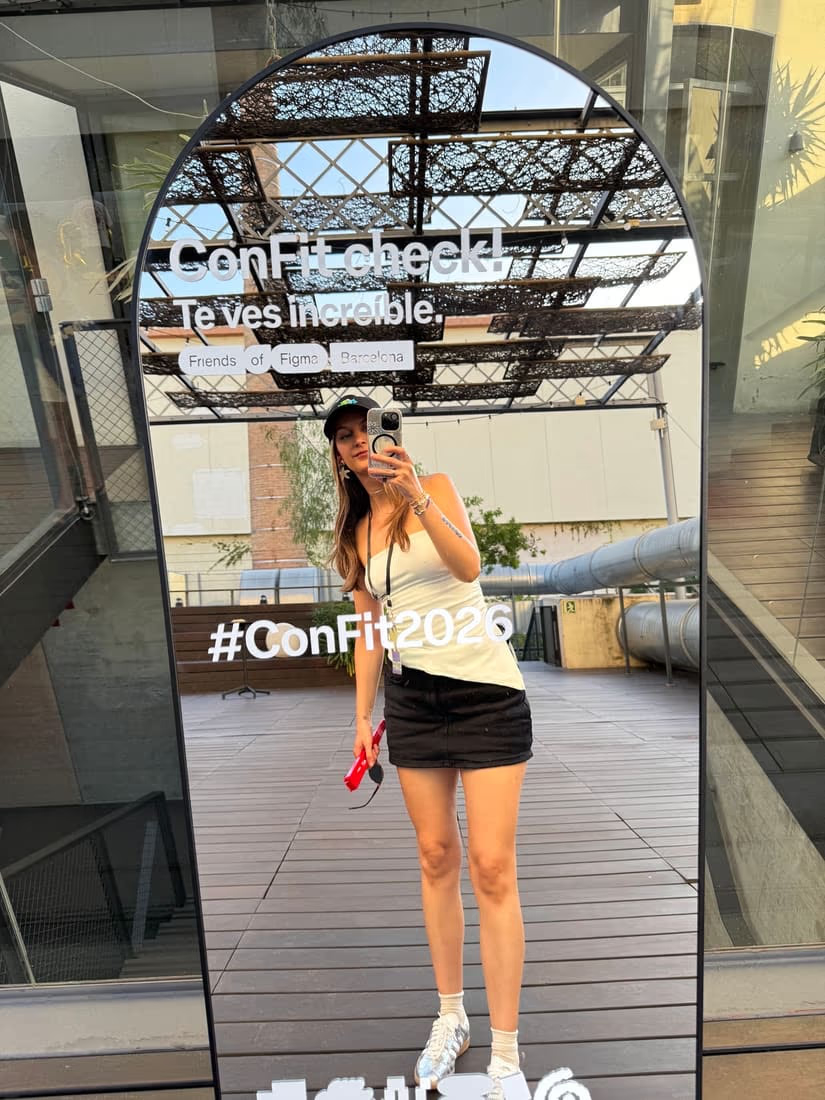
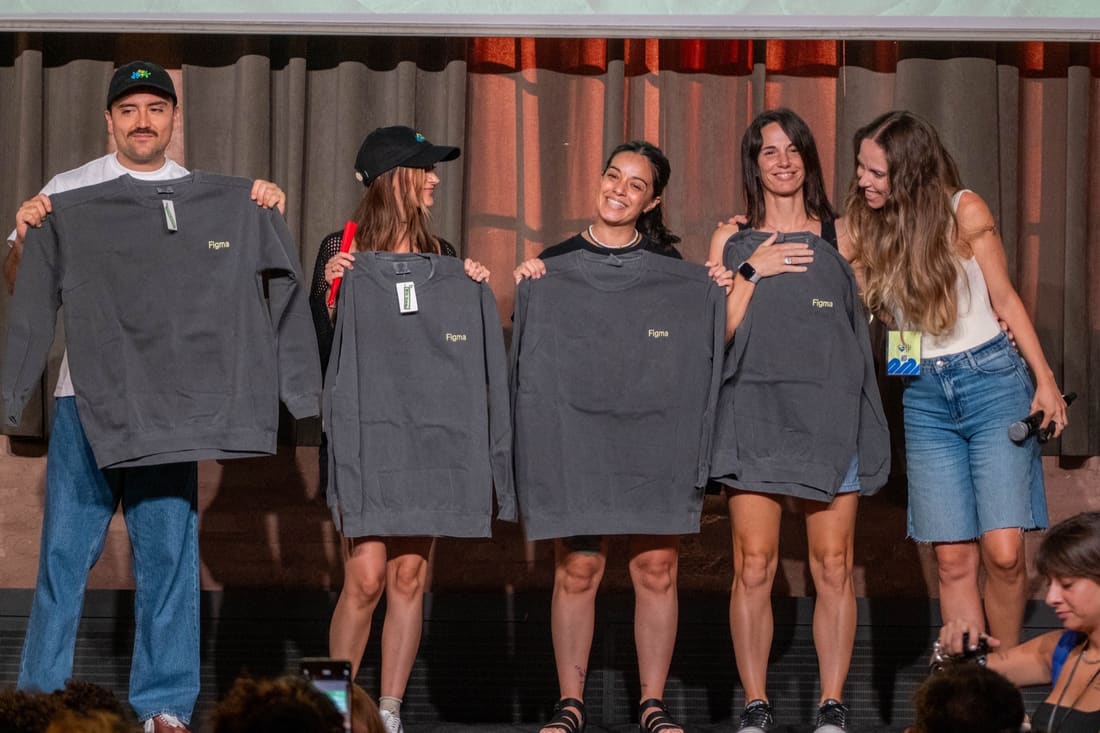
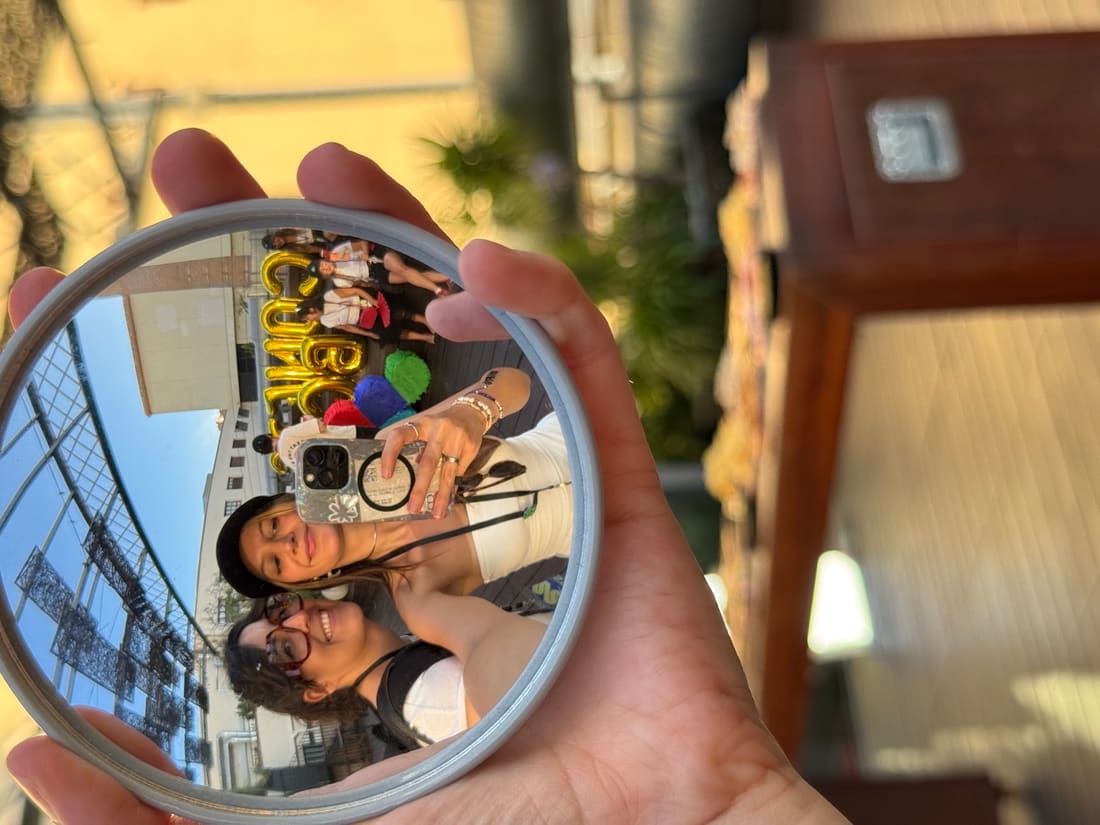
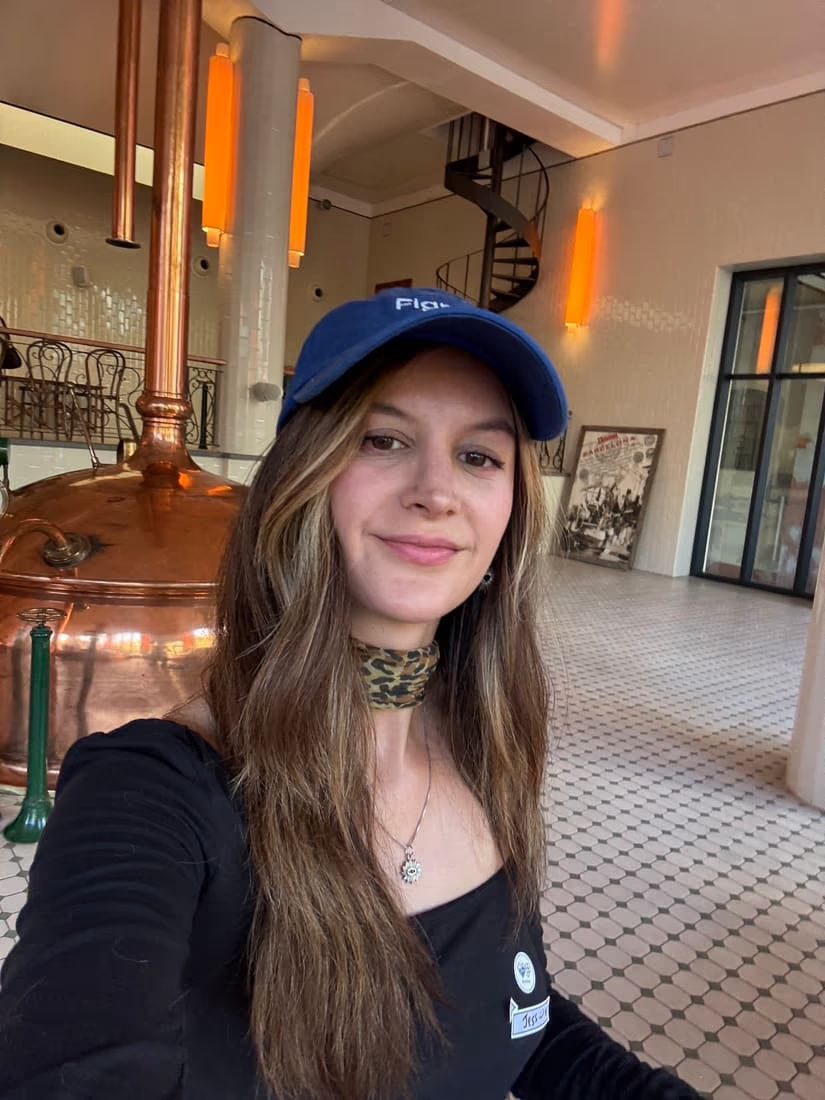
the community, in pictures

what i take away
- The welcome is an interface. A person’s first five minutes at an event can be designed like an onboarding: fewer steps, fewer doubts, one clear action.
- Operations are invisible when they’re done well. Nobody comments that check-in was smooth; they only comment when it wasn’t. That’s the standard.
- Connecting people is a skill, not a trait. You train it: remembering names, listening two sentences longer than is comfortable, and knowing when to step out of the conversation.
- Having been the one who arrived knowing nobody is what lets me spot that person now.
- Community gives back more than you put in. Volunteering on a Saturday morning assembling lanyards has given me the strongest professional network I have in Barcelona.